As this year closes, let me take a moment to express my gratitude and appreciation to all of you that have made this such a great year.
For those patrons that purchased work, you may never truly understand what your support actually means, I work to pay for the necessities so I can continue creating art. Your patronage represents more than a monetary or financial reward, it is encouragement and artistic freedom.
Again, my sincerest gratitude and a Happy New Year!
Jim
-
For my loving wife Linda, no words can express my appreciation for you. You are the best thing that ever happened to me. I am so grateful to have you in my life. Thank you for making me feel like the luckiest man in the world every single day. I love you with all my heart. Happy Anniversary
-
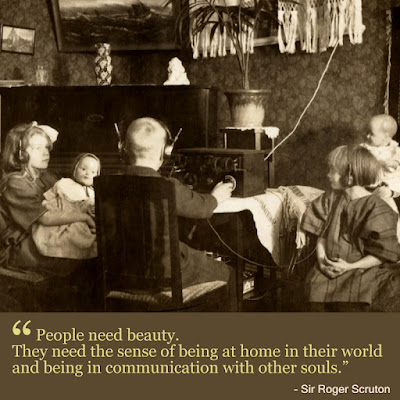
"People need beauty. They need the sense of being at home in their world and being in communication with other souls." - Sir Roger Scruton
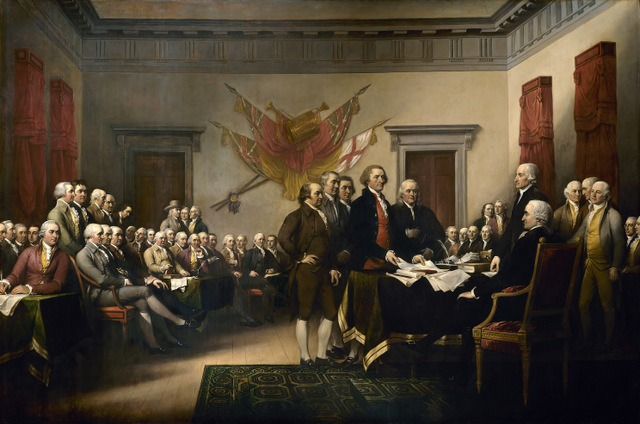
This painting depicts the moment on June 28, 1776, when the first draft of the Declaration of Independence was presented to the Second Continental Congress. The document stated the principles for which the Revolutionary War was being fought and which remain fundamental to the nation. Less than a week later, on July 4, 1776, the Declaration was officially adopted, it was later signed on August 2, 1776
"We hold these truths to be self-evident, that all men are created equal, that they are endowed by their creator with certain unalienable rights, that among these are life, liberty and the pursuit of happiness. That to secure these rights, Governments are instituted among men, deriving their just powers from the consent of the governed."
Hello friends, as I write my Spring newsletter, I cannot help but think to myself is this essential? It just seems like there are much more pressing events happening in the world today. That talking about art; well, may not be that important in this Spring of Covid 19. This crisis is unprecedented, I cannot think of anything that compares to it in my lifetime.
Honestly, as far as work, I have not been directly impacted much by the pandemic.But I completely recognize how unfair this coronavirus has been to so many. Those daily death tolls are stark reminder that there is a real difference between tragedy and inconvenience.
For me, Art has always been that place to escape to. I have been self-employed most of my life as an artist and spent thousands of solitary hours in the studio. Even back when I was doing advertising art, we had a saying, “no news was good news” meaning when a project was delivered if you did not get a call on it from the client you just assumed that they were happy and you moved on to your next project. I would go days buried in my work without speaking much. As it turns out I’ve all been self-quarantining for years!
And these days as a fine artist working on the art I want to create, I probably am even more isolated, but that is quite ok with me. We all need interaction with others, but the truth is that art is not a group activity. Nor a spectator sport or is it created by committee as some current trends want to imply. Meaningful art is created through the internal reactions of an artist to the world.
The catch is that what gives art meaning…is its capacity to connect with other people.
I see painting as a very contemplative experience, but it is also the investigation of the world around me. The thoughts, feelings, and experiences of this time of isolation.
So that big word “Art” cannot exist in a vacuum. Art illustrates the human experience—the wonder of it, the bewilderment of it, the whimsy of it, and yes even the tragedy of it. We would not be who WE are (or connected so deeply) without the essential existence of art.
It's nice to be able to share some positive news with you. My painting Japanese Teapot was accepted into the National Oil and Acrylic Painters Society (NOAPS) 2020 Best of America Small Painting National Juried Exhibition.
-Best of America Small Works exhibition hosted by the McBride Gallery, 215 Main Street in Annapolis, MD 21401. For those that like to know the numbers, 150 paintings were selected from 1096 entries.”
The show has been extended until June 7, 2020
At last count, 15 paintings have sold from the 2020 Best of America Small Works Exhibition. With so many galleries, exhibitions and events being forced to close or cancel due to COVID-19. I want to thank Cynthia at the McBride Gallery who has been working diligently at promoting the exhibition online and extending the physical exhibition, so thankful for her efforts.
To view the paintings in this exhibition please visit the gallery's website,
As this year closes, I would like to take a moment to express my gratitude and appreciation to all of you who have made this such a great year. I appreciate your, kindness, support, and generosity.
Hope you have a great 2019.
Thank you!
The Sun will not rise or set without my notice and thanks. (Winslow Homer)
For my loving wife, no words can express my appreciation for
you.
The source of my greatest happiness. I am extremely lucky,
and extremely thankful… for you.
Creative Commons is a nonprofit corporation dedicated to making it easier for people to share and build upon the work of others, consistent with the rules of copyright.
This has been a busy spring, lots of art activities going
on, exhibitions and shows in several local communities which I am participating
in. So it’s been a lot of framing and organizing of work, between that and the
turbulent weather we are having here, there has not been much brush time.
Did get this little study done, I like these long views across the plowed fields, very typical Southern Illinois scenery this time of
year. It is also a pretty good metaphor for me to keep in mind, when placing
your work out there to exhibit you need to see the long view. Like
everybody else I get impatient about the goals I want to achieve, I tell myself
my skills need to be at this level, my sales at that and so on and on. The reality is that with all of this stuff, - the
journey to success is not a sprint, but a marathon.
I paint what I see as I find it in nature, mostly. I never
paint it exactly, I pick and choose elements I like, move a tree here or there,
add more interest to the clouds. Do some rearranging and compose some harmony
out of all the chaos to make visual sense to me.
What I always strive to do is stay true to the original idea,
in it is the source of inspiration.
Without inspiration you are just making marks. No matter what
embellishments I may add or take away in a painting, they must support the original
concept. What is the painting about, is it the sky? If that is the inspiration,
then everything supports that idea. When you know what to emphasize in a scene
you understand what elements to manipulate to better communicate the feelings
you have about a particular place or time. When its about the mood or feeling of
a place then your choices should speak to that connection. That relation is
certainly the hardest concept to focus on and express in a painting.
This becomes the artist-muse relationship, that goal to
capture something illusive, intuitive, private, visceral or complex. It becomes a
creative force of its own having the power of moving the intellect or emotions.
I am not certain how many sketches and paintings from Cedar Lake I have done; I just know I am not finished.
“I'm not in control of my muse. My muse does all the work.”
Ray Bradbury
Nearly all of my work begins with some type of preliminary
sketch, either a thumbnail drawing in a sketchbook or oil study in my Pochade
Box. Lately I have been spending a great deal of time sketching, gathering
information outdoors and drawing from my imagination. Creating small rough
abstract sketches to work out composition and design elements.
Mainly I am using pen and ink with watercolor. I like the
ink because you don’t fiddle with it as much as say a pencil sketch, you just
have to lay it down with some speed and confidence. It is very permanent mark
making and you simply/humbly live with what you put down and move along. Over
that I wash in some color, do some crosshatching and try to capture the value
and mass pattern. I call them my scribbles; and that is what they are, quick
notations of design ideas based on nature.
They are exercises in capturing what I see in front of me
from direct observation (the Art of Seeing) but also it is about the simple
pleasure of drawing.
I look for a strong arrangement of dark and light patterns,
the Japanese use the word Notan which means the "dark-light"
harmony. But a notan is also as much
about shape/form, positive/negative, figure/ground relationships. It is why it
is such a strong abstract design tool. I like to think of it as being the
ying-yang of composition. Ever walk into a gallery full of art and be
instantly attracted to a particular piece, drawn to it from across the room?
Our eyes are drawn to the strong arrangements of shapes and patterns. As
you learn to use this design tool you will recognize it in paintings and
drawings of master artists.
Slow down mentally and take a long look at your subject,
carefully choose the center of interest or theme of the piece, what it is
about, what has drawn you to this motif and design outwards from that point.
Simplify and edit down the elements by making them subordinate to that central
idea. That is the key to good composition.
It is fun working out compositions and concepts, playing
with the elements and ideas based on the anatomy of the landscape. Let them
evolve and "brainstorm" many studies, before you know it you will
have sketchbooks full of Composition Thumbnails which are a library of knowledge
and imagination to work from.
“Even in front of nature one must compose.” ~ Edgar Degas
Color Studies:
Last Light, oil on panel, 8 x 10 in, Jim Serrett
Over the Horizon, oil on panel, 8 x 10 in, Jim Serrett
To my dear friends, colleagues, collectors, bloggers and
loved ones who made 2016 such a wonderful year, you will never know how much
your support is appreciated.
This Blog has been an amazing thing and has served multiple purposes. It has created a creative community of which I am a part and given me a voice
to speak about the art I create. It has allowed me to think deeply about my
work, art in general and its importance in the world. It has given me a window
into the making of my art and by others, and a wealth of information to
share and digest. I admit it has been mostly about me, for I benefit the
most. But it would not exist without you.
Thank you. Thank you all for your continuing support.
The sky was filled with colors.
The Light of the Sun, oil on panel, 5 x 7 inches, Jim Serrett
The sky on the way to the concert……
Tangled Up in Blue, oil on panel, 5 x 7 inches, Jim Serrett
At Paul Ice Recreation Area, I did not paint them into this little study but two little ducks were working this cove, diving under water and paddling around. Fun to watch as I painted.
By the Lakeside, oil on panel, 5 x 7 inches, Jim Serrett
Quiet moments on the lake - where the only sounds are lapping water on the shore and the whisper of the wind through the trees.
Whispering Cedar, oil on panel, 5 x7 inches, Jim Serrett
We are having an unusual autumn as the weather seems to
be unable to make up its mind, cool then hot sunny days, then gray
days without much rain. I think we have had them all. The nice thing is that we have been able to
get out on the lakes in the kayaks a bit later this season and enjoy some of
the color change.
The Fall color is a bit muted and I have read that this can be blamed on the very dry conditions. We still have quite a few pockets of
green with a scattering of rust and earth colors. All of which makes for an interesting
contrast of colors on the lakes.
This kind of scenery is perfect for my color choices, I mainly use a earth palette which tends to be more about tones and values than
saturation. Naples Yellow, Yellow Ochre, Burnt Sienna, Burnt Umber, French Ultramarine
is really about all I used on these pieces. These low key earth palettes will
make you look closely at building color relationships and thinking about color
saturation.
My pochade studies both on location and in the studio, are essential to my artistic development and process. They are where I gain that all important canvas mileage and experiment with color, composition and ideas. I try not to get too caught up if they are good or presentable, but if they answered those basic questions of how and why. How do I paint this to look like that and why am I painting that?
My oil sketches start very simply with the big patterns of color and shape, looking for the abstract quality that unifies the scene before me. Nature is a highly accomplished organizer and she can be very complex, often it takes careful study to see her design. This is the challenge that keeps us engaged in the creative process. The exploration of light, form, space, and color interpreted through strokes and dabs of paint which communicate a sensual vision of the world.
And then there is this thought; leave at least some hours
in each day to enjoy the nature around you. Tune out from the daily chaos of
life, and observe, draw or paint from nature.
Here we are at the end of
my 30 in 30-day painting challenge and I have got to say that it zoomed by, I must
have had fun.
I enjoyed exploring
composition and colors with these alla-prima paintings. From the beginning I
intended to concentrate on design and composition but as I reflect over the collection
I started to see an unexpected story being told. As I was looking at the big
forms in nature, a theme quickly
evolved that was about earth and sky and water. Lots of weather effects,
dramatic skies, sunsets and clouds, the forces of nature. So I was happy that they collectively
communicated the spirit of the natural world.
My approach was to be as
direct and complete with my brush as I could and record the motif in front of
me. The goal was to make quick and spontaneous decisions, describing things
simply and abstractly. Yet hang onto that illusion of real space and place and
the experience of it. I find myself looking a lot at the Barbizon painters, Charles-Francois
Daubigny and Jean Baptiste Camille Corot and the Russian School of the late nineteenth century Isaac Levitan and Ilya
Repin. These painters handle the sense
of space so masterfully, so much abstraction in their work, brush handling, surfaces
and texture. They could just drag the viewer into the atmosphere of the
painting
Anyway this is where my
head has been during this endeavor. Looking for insight from artist of the past
and observing the world for inspiration.
There is probably no real way to put into words the appreciation I have for the community of artist and patrons I have had the privilege of knowing through this blog. It has been your ongoing support, encouragement and exchange of ideas that have made this venture so satisfying.
For those of you that have given one of my works a home, thank you.
As an artist, there is no greater compliment than to have someone appreciate your work enough to make it their own.
For that I am truly honored.
My sincerest gratitude.
Happy Holidays and have a great New Year.
And to my loving wife, my biggest supporter, my greatest friend, the center of my universe, my inspiration…...
Linda, I could write all day but there are no words written that can fully express my appreciation and love for you.
Happy Anniversary my love.
Jim
"If I could say it in words, there would be no reason to paint."
Join Creative Commons, http://creativecommons.org/
Creative Commons is a nonprofit corporation dedicated to making it easier for people to share and build upon the work of others, consistent with the rules of copyright.
The weather is just perfect for some location painting. Getting out there and doing studies and sketches and building a library of
ideas to develop over the winter months into studio
paintings. For those of you familiar
with my Pochade box you might notice I have added a glass palette with
neutral gray backing. I think the patina on the wood palette was getting so
dark that I was having problems seeing the darker values. I really miss the wood
surface, I just kind of like the feel of it. The gray residue and chunks
of paint seem so much more interesting. Maybe when I get some down time I will
resurface the wood palette and start again. But for now the gray glass is sure convenient
and easier to see the color on with these ageing eyes.
I think my landscapes have evolved into a study and investigation
of atmosphere. I want the ariel or
atmospheric perspective to carry the viewer throughout the picture. I really
feel that to express my response to the landscape I must impress the environment
upon the viewer and make them swim within the air. So I have been pushing this idea and incorporating multiple layers of glazing and scumble to achieve that feeling.
For us here in the lower Mid-west the winter has
certainly been cold, but nothing like the bone chilling, snow thumping other parts
of the country have received this year. No words sound as good as winter is
gone and spring has come. But I will say that I have enjoyed the palette colors
of winter this season, there is something about the tones of red and yellow
earth under a dramatic sky. The landscape freed of its foliage exhibits
a unique anatomy and rhythm, a hidden depth and perspective accented with the
bared lace of trees.
A major part of being an artist is seeing things through
different eyes; observing nature in ways others might overlook, and draw
attention to the beauty of simple things. When we accomplish/connect with that,
we can create a shared visual experience or artistic vision that can be more compelling
and authentic than reality itself.
“In every walk with nature, one receives far more than he
seeks”
I have been painting a lot of sunsets lately, there is
something about the magical hour just before the sun disappears over the
horizon that has fascinated people for eons. For good reason, when you get the
bounce of light, the last gleam, under the floating clouds it can be incredible
and mystical. I wanted to capture that random sense of order, the character of
the light and convey that feeling into the painting.
We've kayaked to and painted this location many times and
each time the scene is different.
The division of light and shade is always interesting
when on the water, it is a unique interplay of reflections and shapes. As the
sky changes so does the water, the cloud cover and the time of day all influence
the subject and present an ever changing play of light and shadow. And as we move from season to season the
transformations become even more dramatic.
There is a beauty and complexity in the simple subject of
earth, sky and water that will never cease to inspire me. There is nothing ordinary or boring in nature if you take the time to look deep into your subject.
“It's not what you look at that matters, it's what you
see.”― Henry David Thoreau
Jim Serrett, Autumn Sky Over Cedar Lake, oil on panel, 7 x 9 in.
The dynamic horizon at sunrise or sunset is the hardest to
capture, you have either to chase the light with the brush or prepare yourself
for the event. My approach has been both, to do pencil sketches and color studies
on location, to use them, and my memory of the experience to create/finish
pieces in the studio. The library of information I gather from observation
helps me understand what I am seeing and hopefully interpret it in a meaningful
way. As I remember and conceptualize the
landscape I attempt to make informed decisions, based on my observed details
and the nuances of nature. However I try to be as truthful to the experience as
possible, to keep in my mind’s eye that which inspired me in the first place.
Waxing philosophical, I believe our brains are conscious
of almost every experience in our life and every encounter we have, and that
stored among those billions of neurons in the brain are endless images and
impressions. That it is not only possible to train ones visual memory but a
necessity for the artist to do so. Up until maybe the later part of the
nineteenth century memory exercises of some type were part of most academic art
educations. If it be as simple as practicing blind contour drawing or copying
prints of sculptures as in the Beaux-Arts tradition. They recognized the
importance of a highly trained visual memory as a skill an artist used in
companionship with the direct study of nature.
I see memory training as another tool in my tool box helping me interpret what I see in front of me.
Technically I've been able to slowly build glazes of
color to explore those atmospheric effects I am after and was the initial
inspiration.
I love this quote by Edgar
Degas on the subject, “If I were to open an academy I would have a five story
building. The model would pose on the ground floor with the first year
students. The most advanced students would work on the fifth floor." I can
imagine the advanced students dashing up and down flights of stair as they
study the model and dart back to their easels to make their marks.
Explore - Question - Learn - - Enjoy, Jim
Images:
Jim Serrett, Lake Murphysboro Sunset, oil on panel 5 x 7 in
Jim Serrett, Perseids Sunset, oil on panel, 5 x 7 in
Graphite Sketch on toned paper.
Sketchbook page
Links:
Memory Training For Painters by Richard Lack from the
Classical Realism Quarterly 1990